Your boxes are out, the truck's gone, and you're standing in an empty home that looked clean until the furniture left. That's when the oven grease, shower film, cabinet crumbs, and wall scuffs show up. Inspectors already know where to look, and most deductions don't come from a home that's dirty everywhere. They come from a few predictable failures.
This move out cleaning checklist ranks tasks by deduction risk, not by room order alone. Start where grease, moisture, and visible marks trigger complaints, then work through storage, high dust, and final handover. Each item names what to clean, what cleaning can't fix, and what to photograph before you return keys.
Renters carry most of this risk. The U.S. Census Bureau mobility report notes renter mobility rates generally ranged from 38% to 42%, compared with 9% to 12% for homeowners. Treat the clean as a documented turnover, not a quick tidy. Compare condition to move-in records, separate dirt from damage, and don't repaint or repair aggressively without lease direction. A clean that's undocumented is easy to dispute.
Table of Contents
- [1. Kitchen Appliance Deep Clean (Oven, Refrigerator, Dishwasher, Microwave)](#1-kitchen-appliance-deep-clean-oven-refrigerator-dishwasher-microwave)
- [What to clean inside, not just outside](#what-to-clean-inside-not-just-outside)
- [2. Bathroom Descaling and Fixture Restoration](#2-bathroom-descaling-and-fixture-restoration)
- [Where cleaning stops and repair starts](#where-cleaning-stops-and-repair-starts)
- [3. Walls, Baseboards, and Light Switch Detailing](#3-walls-baseboards-and-light-switch-detailing)
- [Clean, document, ask, or leave alone](#clean-document-ask-or-leave-alone)
- [4. Interior Windows, Sills, and Tracks](#4-interior-windows-sills-and-tracks)
- [Get streak-free glass without redoing it](#get-streak-free-glass-without-redoing-it)
- [5. Floor Cleaning and Carpet Care](#5-floor-cleaning-and-carpet-care)
- [Sequence floors to control dust](#sequence-floors-to-control-dust)
- [6. Inside Cabinets, Closets, and Drawers](#6-inside-cabinets-closets-and-drawers)
- [Kitchen and bath storage needs extra time](#kitchen-and-bath-storage-needs-extra-time)
- [7. Dusting Ceiling Fans, Vents, Light Fixtures, and High Surfaces](#7-dusting-ceiling-fans-vents-light-fixtures-and-high-surfaces)
- [Capture dust instead of moving it](#capture-dust-instead-of-moving-it)
- [8. Trash Removal, Entryways, Garage, and Final Walkthrough Documentation](#8-trash-removal-entryways-garage-and-final-walkthrough-documentation)
- [Build your evidence pack](#build-your-evidence-pack)
- [How the eight move-out cleaning tasks compare by inspection risk and effort](#how-the-eight-move-out-cleaning-tasks-compare-by-inspection-risk-and-effort)
- [Turn This Checklist Into a Move-Out Plan You Can Execute](#turn-this-checklist-into-a-move-out-plan-you-can-execute)
<a id="1-kitchen-appliance-deep-clean-oven-refrigerator-dishwasher-microwave"></a>
1. Kitchen Appliance Deep Clean (Oven, Refrigerator, Dishwasher, Microwave)
Inspectors open appliances first because residue is objective. A greasy oven, sticky refrigerator shelf, or sour dishwasher filter reads as unfinished even if counters shine. Start here while you still have time for dwell time and a second pass.
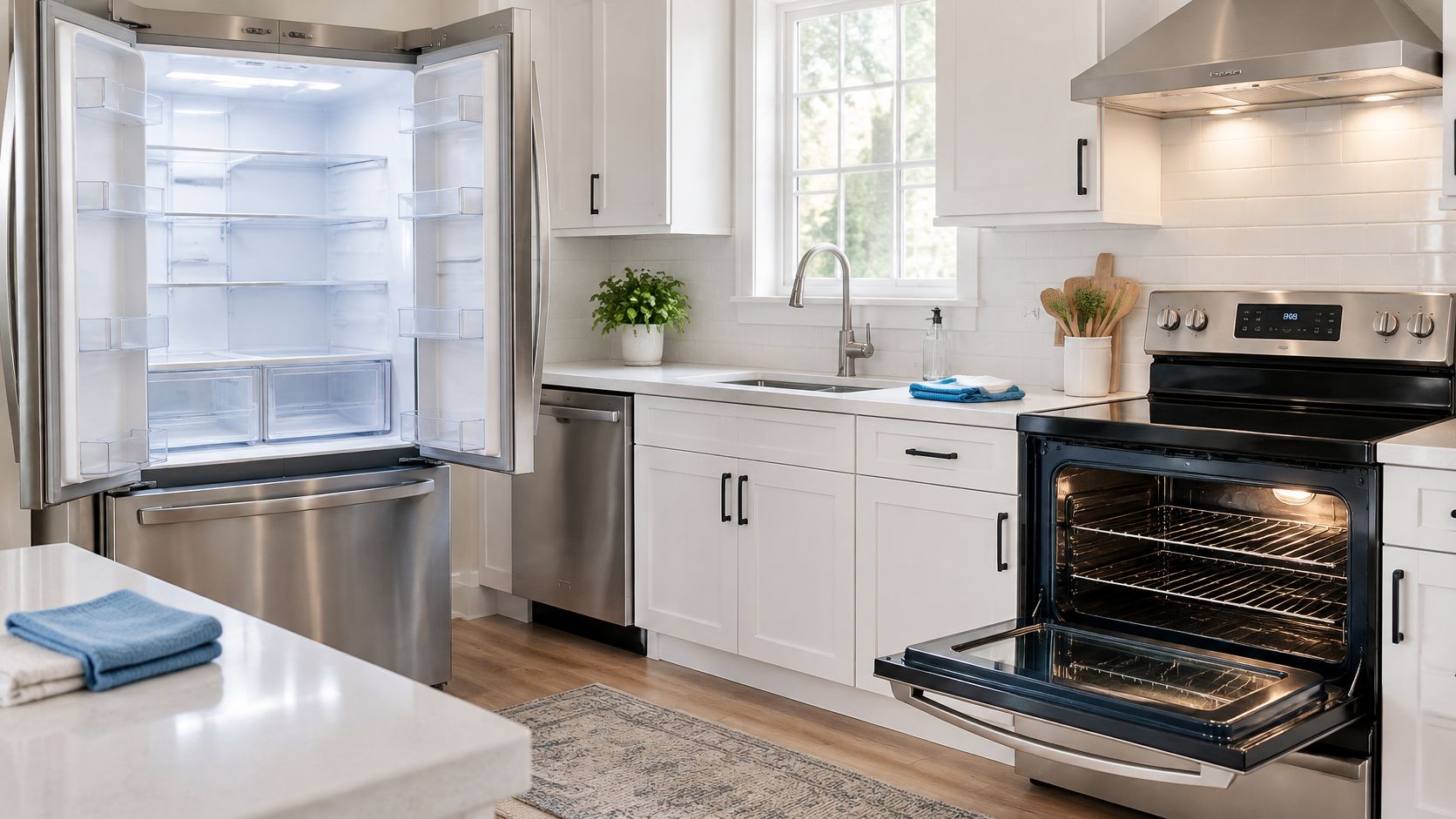
An empty, inspection-ready kitchen should look like this before you photograph it.
<a id="what-to-clean-inside-not-just-outside"></a>
What to clean inside, not just outside
Run the oven self-clean cycle early, let it cool fully, then wipe ash from the cavity, racks, and door glass. If you use degreaser, give it time to soften baked-on carbon instead of scrubbing harder. Empty the refrigerator a day ahead, wash shelves and crisper drawers, wipe seals, and leave the door open to dry so odors don't rebuild.
Pull the dishwasher filter, rinse trapped food, wipe the door seal, and run an empty hot cycle. Steam the microwave with a bowl of water, then wipe the ceiling, walls, and turntable. For fridge technique and order, follow our guide to deep cleaning a refrigerator before you load chemicals inside.
- Document open appliances: Photograph the oven, fridge, dishwasher, and microwave with doors open and empty.
- Note pre-existing damage: Cracked crisper drawers or chipped racks are condition items, not cleaning failures.
- Confirm add-ons: We offer oven interiors and refrigerator deep cleans as add-on tasks at booking, so confirm scope before scheduling.
Say a renter books cleaning the day before a walkthrough. The win isn't a shiny stovetop. It's timestamped photos showing clean interiors when the manager opens every door.
This short walkthrough shows the sequence for working through a vacant kitchen without backtracking.
<iframe width="100%" style="aspect-ratio: 16 / 9;" src="https://www.youtube.com/embed/pnwyA3PIjJg" frameborder="0" allow="autoplay; encrypted-media" allowfullscreen></iframe>
<a id="2-bathroom-descaling-and-fixture-restoration"></a>
2. Bathroom Descaling and Fixture Restoration
A bathroom can smell clean and still fail. Hard-water film, soap scum on glass, pink buildup at the tub line, and dark caulk tell an inspector the room was wiped, not restored. In Orlando humidity, that buildup returns fast if surfaces stay wet.
Scrub the toilet inside the bowl, under the rim, around the base, and behind the tank. Descale faucets and showerheads, scrub grout and tub walls, polish mirrors, and wipe vanity exteriors and inside drawers. Clean the exhaust fan cover, since a dusty vent undermines an otherwise sanitized room.
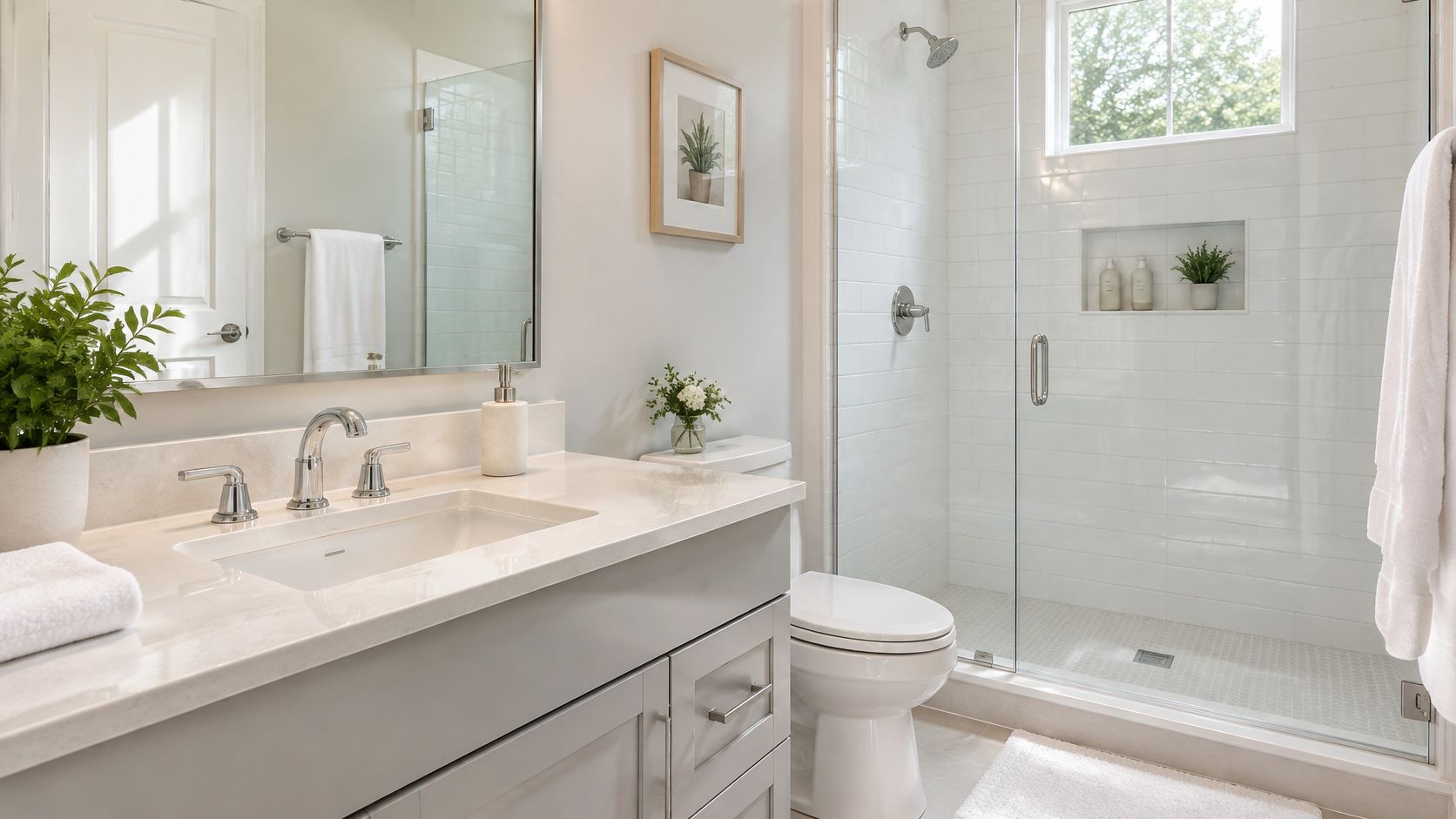
A finished bathroom should show clear glass, bright fixtures, and dry grout lines.
<a id="where-cleaning-stops-and-repair-starts"></a>
Where cleaning stops and repair starts
Test descaler on a hidden spot first, especially on brushed metal, natural stone, or older acrylic. Acidic products lift mineral scale well, but they can dull finishes if you leave them too long. Rinse thoroughly and dry fixtures so spots don't reset.
Practical rule: If caulk is cracked, lifting, or stained through the material, photograph it and report it. Scrubbing won't restore failed caulk, and bleach can make the damage look worse.
Run the exhaust fan during cleaning and drying, and leave shower doors open. Our step-by-step bathroom deep cleaning method covers product order for tile, glass, and fixtures.
Say a tenant has mildew at caulk lines and cloudy shower glass. Descaling and grout scrubbing can remove the film and surface growth, while torn caulk goes on the condition note. That split protects you from paying for a repair disguised as cleaning, and it shows the manager you didn't hide the problem.
<a id="3-walls-baseboards-and-light-switch-detailing"></a>
3. Walls, Baseboards, and Light Switch Detailing
Walls decide whether a home looks cared for at a glance. Inspectors run their eyes along baseboards, door frames, and corners where dust lines, shoe scuffs, crayon, and tape residue collect. These marks are often called beyond normal wear when they're concentrated or left untouched.
Work top to bottom with a damp microfiber cloth and mild cleaner. Wipe baseboard tops first, then faces, then spot-clean painted walls. Clean around handles and light switches where fingerprints darken paint, and wipe switch plates and outlet covers with a barely damp cloth, never a soaking one.
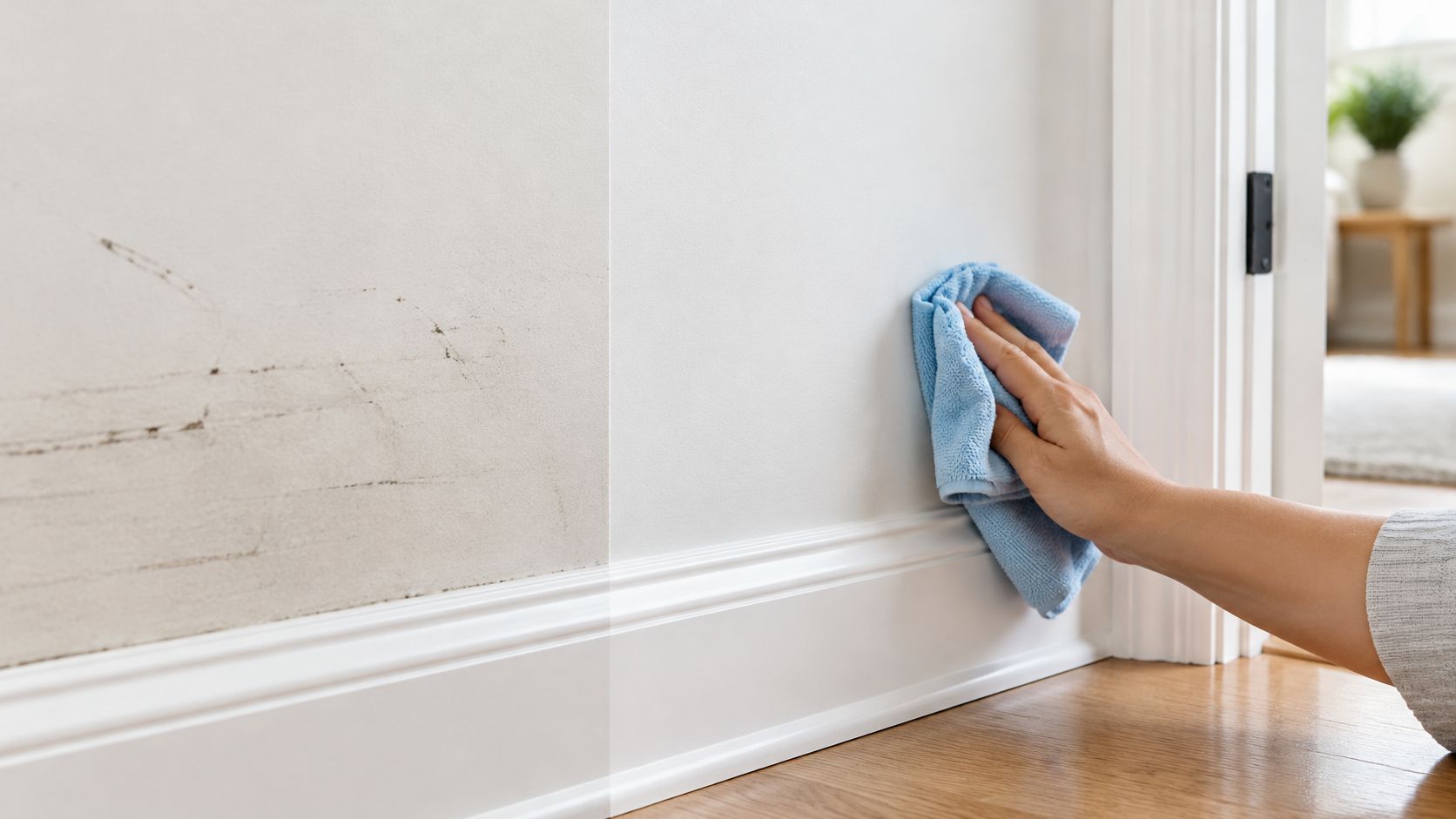
Close work on scuffs takes a light hand and a test spot first.
<a id="clean-document-ask-or-leave-alone"></a>
Clean, document, ask, or leave alone
Official guidance in the California landlord tenant guide frames the standard as returning a unit to its move-in level of cleanliness, excluding ordinary wear and tear, not making it newly renovated. Use that logic everywhere. Remove surface marks, but don't repaint, patch, or sand without written direction, because a mismatched repair can create a new charge.
- Test first: Try a melamine sponge or cleaner behind a door before using it on flat paint.
- Stop at damage: Holes, gouges, and peeling paint need written notes and photos, not harder scrubbing.
- Photograph corners: Entry walls, hall turns, and areas behind doors show scuffs inspectors check.
Say a renter lifts crayon and door-frame marks with gentle cleaner and photographs two anchor holes separately. That's stronger than filling holes badly the night before inspection.
<a id="4-interior-windows-sills-and-tracks"></a>
4. Interior Windows, Sills, and Tracks
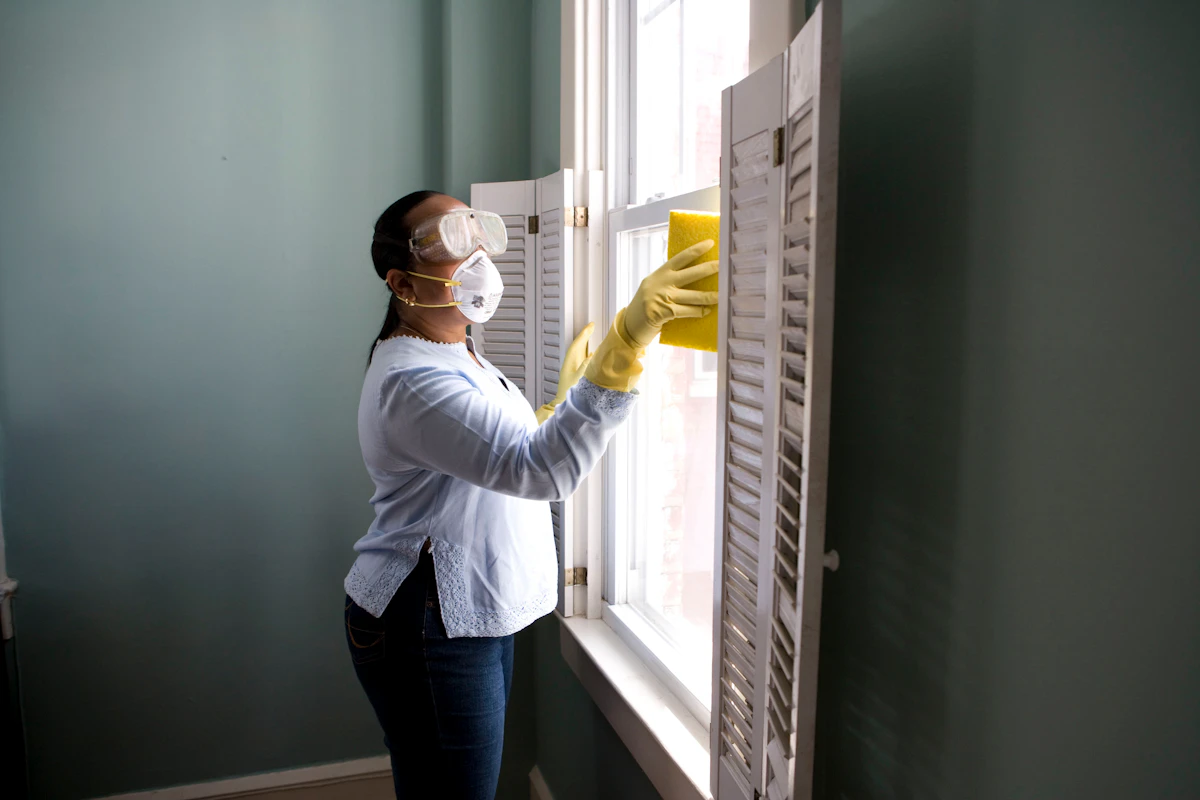
Dirty glass makes a clean room look unfinished, but tracks are the true giveaway. Inspectors slide windows open and find grit, dead insects, and black buildup that a quick glass wipe never touched. Blinds hold the same dust at eye level.
Vacuum tracks first with a crevice tool, then wipe with a damp cloth or old toothbrush. If you wet dusty tracks first, you'll make mud and push it into corners. Wash interior glass, wipe sills and frames, then buff with a dry microfiber cloth to remove haze.
<a id="get-streak-free-glass-without-redoing-it"></a>
Get streak-free glass without redoing it
Clean glass in shade or on a cloudy day when possible. Direct sun dries solution before you can buff it, leaving streaks you'll chase room to room. Use two cloths, one damp for washing and one dry for finishing, and change them when they start dragging dirt.
- Check operation: Open and close each window, confirm locks engage, and note torn screens separately.
- Dust blinds slat by slat: Close them one way, wipe, then reverse and repeat.
- Confirm scope: We list interior windows as an add-on task at booking, so don't assume every package includes them.
A window isn't done when the glass shines. It's done when the track is empty, the sill is dry, and the lock works.
Say a homeowner is preparing a vacant house for rental showings. Clean interior glass improves light, but clean tracks and sills prove the home was detailed, not just staged for photos. Photograph one open window per room if tracks were heavily soiled at move-in, and keep broken blind slats on your damage list instead of trying to glue them.
<a id="5-floor-cleaning-and-carpet-care"></a>
5. Floor Cleaning and Carpet Care
Floors cover the largest visible area, so they set the verdict in the first ten seconds. Dust lines where furniture sat, sticky kitchen tile, and traffic-lane carpet tell an inspector exactly what was skipped. Clean floors last in each room, after high dust and wall work drop debris down.
Vacuum edges with a crevice tool, then open areas, including closet floors and under appliance edges where access allows. Mop hard floors in sections and change dirty water before it leaves film. Scrub tile grout in kitchens and baths where mop water alone won't lift embedded soil.
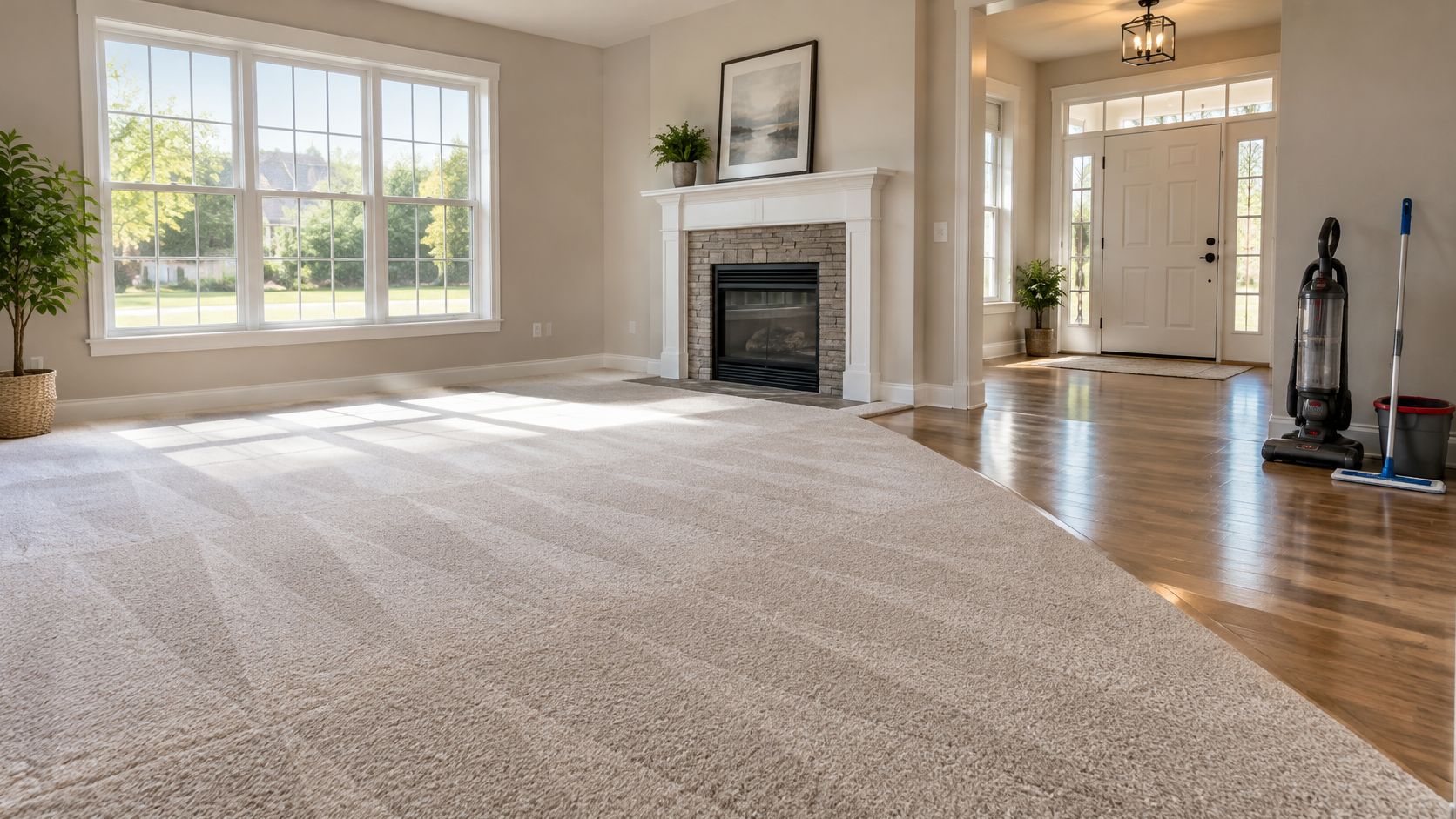
An empty room reveals every edge, vent line, and carpet track.
<a id="sequence-floors-to-control-dust"></a>
Sequence floors to control dust
The EPA guidance on indoor particulate matter notes cleaning can temporarily re-suspend fine particles and recommends HEPA-filtered vacuum equipment for sensitive occupants, plus damp dusting to keep settled dust from becoming airborne. Vacuum after other dust-generating work, then ventilate when outdoor conditions permit. Our floor deep cleaning guide explains method by surface type.
Photograph carpet before extraction so existing stains, burns, or pet damage aren't blamed on cleaning. Extraction lifts soil, but it won't restore crushed pile, bleach spots, or torn seams. Let carpet dry fully before final photos, since damp carpet looks darker and can read as staining.
Say a tenant moves furniture out in the morning and schedules extraction that afternoon. That timing exposes hidden lanes and lets you document the true result the next day.
<a id="6-inside-cabinets-closets-and-drawers"></a>
6. Inside Cabinets, Closets, and Drawers
Empty storage is not the same as clean storage. Inspectors open kitchen cabinets, bathroom drawers, pantry shelves, and closet doors looking for crumbs, hair, sticky rings, and liner residue. These are fast deductions because the fix is obvious and the neglect is easy to photograph.
Empty everything at least a day before the final clean. Vacuum crumbs and shelf grit first, then wipe interiors with a damp microfiber cloth and mild cleaner. Remove shelf liners if they're yours, clean underneath, and dry the surface before closing doors.
<a id="kitchen-and-bath-storage-needs-extra-time"></a>
Kitchen and bath storage needs extra time
Degrease cabinet exteriors around handles and stove-adjacent doors, where cooking film builds up. In bathrooms, hair and toothpaste residue collect in drawer corners and under removable trays. Wipe closet shelves, rods, and baseboards, and vacuum closet floors last.
- Leave doors open to dry: Trapped moisture creates odor and can swell particleboard shelves.
- Check for pests: Droppings or dead insects under liners should be photographed and reported, not just wiped away silently.
- Note hardware damage: Loose hinges, missing knobs, and cracked shelves are repairs, not cleaning tasks.
Say a property manager turns several units in the same week. Clean cabinet interiors speed approval because the next tenant can load food and toiletries without a re-clean. For a renter, photos of empty, wiped shelves answer the most common kitchen complaint before it's raised. Don't leave cleaning supplies, hangers, or shelf paper behind unless your lease or manager specifically says to.
<a id="7-dusting-ceiling-fans-vents-light-fixtures-and-high-surfaces"></a>
7. Dusting Ceiling Fans, Vents, Light Fixtures, and High Surfaces
High dust is easy to miss when you live in a home and impossible to miss in an empty one. Inspectors look up at fan blades, vent covers, light fixtures, and the tops of doors and cabinets. A gray edge on a fan blade makes the whole room feel skipped.
Turn off fans and lights and let bulbs cool. Dust from the top down, starting with vents and fixtures, then fan blades, crown molding, cabinet tops, and door tops. Finish lower surfaces and floors after, so you don't clean the same dust twice.
<a id="capture-dust-instead-of-moving-it"></a>
Capture dust instead of moving it
Use a damp microfiber cloth or an extendable duster that traps particles. For fan blades, slide a damp pillowcase or cloth over each blade and pull dust inward instead of flicking it into the room. Remove vent covers only if they come off easily and you can replace them securely, then wash, dry, and reinstall them.
- Clean light covers carefully: Wash removable glass covers in the sink, dry fully, and note cracked covers separately.
- Don't soak fixtures: Wipe fixed fixtures with a barely damp cloth and keep moisture away from sockets.
- Replace dead bulbs if your lease requires it: A dark fixture can be logged as a readiness issue even when it's clean.
Say a seller is preparing for listing photos. Dust-free fans and vents won't be the headline, but visible buildup will show in bright photos and at showings. Cleaning can't fix a noisy fan, yellowed plastic vent, or nonworking fixture. List those as function issues with photos, and don't climb unstable furniture to reach high fixtures. Use a proper step ladder or leave the task to a team with extension tools.
<a id="8-trash-removal-entryways-garage-and-final-walkthrough-documentation"></a>
8. Trash Removal, Entryways, Garage, and Final Walkthrough Documentation
A spotless kitchen won't save a handover if trash bags sit in the garage, a fob is missing, or nobody can prove the condition at key return. Final readiness is a condition and inventory check, not only a sanitation check. Treat the last hour as evidence collection.
Remove all trash, food, cleaning leftovers you don't intend to leave, and abandoned items from closets, cabinets, patios, balconies, and the garage. Sweep entryways and garage floors, wipe the front door and handle, and check outdoor areas for storm debris. Confirm every key, fob, and garage remote against your move-in record.
<a id="build-your-evidence-pack"></a>
Build your evidence pack
The HUD landlord forms page provides a move-in and move-out form covering doors and locks, floors, walls, windows, lighting, outlets, closets, fire-safety equipment, kitchens, bathrooms, and HVAC equipment, with a field for estimated correction cost. Mirror that breadth. Test lights, locks, faucets, toilets, smoke alarms, and HVAC controls, then note failures separately from cleaning.
Recent move-out inspection guidance likewise treats final inspection as a comparison covering keys, fobs, remotes, detectors, HVAC filters, screens, appliances, lint traps, trash, and outdoor areas.
- Take wide and close photos: Capture each empty room, then appliance interiors, cabinets, floors, and fixtures.
- Record handover items: Photograph keys and remotes together and note meter readings where relevant.
- Walk against move-in records: Compare room by room before you hand over access devices.
Say a renter emails timestamped photos to themselves before leaving. If a deposit question arises, that record shows what was clean, what was damaged, and when the unit was surrendered.
<a id="how-the-eight-move-out-cleaning-tasks-compare-by-inspection-risk-and-effort"></a>
How the eight move-out cleaning tasks compare by inspection risk and effort
| Item | Main Inspection Risk | Typical Effort | Best Suited For |
|---|---|---|---|
| Kitchen Appliance Deep Clean (Oven, Refrigerator, Dishwasher, Microwave) | Grease and food residue in appliances | High; oven may take several hours | Move-outs with appliance checks or upcoming showings |
| Bathroom Descaling and Fixture Restoration | Mildew, soap scum, and mineral stains | Moderate to high; depends on buildup | Restoring bathrooms before inspection or listing |
| Walls, Baseboards, and Light Switch Detailing | Visible scuffs, fingerprints, and dust | Moderate; increases with room count | Homes needing detailed wall and trim touch-ups |
| Interior Windows, Sills, and Tracks | Dirty glass, dusty sills, and debris-filled tracks | Moderate to high; tracks and blinds add time | Move-outs where windows are included in the cleaning scope |
| Floor Cleaning and Carpet Care | Stains, odors, and visibly dirty floors | Moderate to high; extraction adds time and drying | Homes needing floor refresh or carpet treatment |
| Inside Cabinets, Closets, and Drawers | Crumbs, sticky residue, and unclean storage areas | Moderate; requires emptying storage first | Move-outs with empty cabinets and closets ready to clean |
| Dusting Ceiling Fans, Vents, Light Fixtures, and High Surfaces | Visible dust on high or overlooked surfaces | Moderate; high areas may require extension tools | Thorough move-out cleans and listing preparation |
| Trash Removal, Entryways, Garage, and Final Walkthrough Documentation | Left-behind items, missed areas, or lack of handover records | Moderate; walkthrough and photos add time | Renters and property managers documenting handover condition |
<a id="turn-this-checklist-into-a-move-out-plan-you-can-execute"></a>
Turn This Checklist Into a Move-Out Plan You Can Execute
Start two weeks out by requesting your property manager's checklist and fee schedule, then compare it to your lease and move-in report. That step tells you whether carpet extraction, interior windows, or appliance interiors are required, optional, or already handled by the building. It also prevents wasted work. You don't need to repaint a wall the manager plans to repaint anyway, and you shouldn't patch or treat a surface when the written standard only asks you to document it.
Work in deadline order, not in the order you notice problems. First, remove belongings and trash so every surface is reachable. Next, tackle the deduction-heavy zones in this move out cleaning checklist, appliances, bathrooms, walls, and cabinet interiors, while products have time to work. Then finish windows, high dust, and floors, in that sequence, so debris falls onto surfaces you haven't completed yet. End with entryways, garage, function checks, and your evidence pack.
Documentation is the part renters skip when they're tired, and it's the part that matters most later. The Census Bureau historical movers table reported 25.624 million people moved during the 2023 measurement year, a scale that explains why managers rely on forms and photos instead of memory. Build the same record for yourself. Photograph wide room views and close details, save receipts, email files to create a timestamp, and ask for a joint walkthrough where available. If a joint walkthrough isn't offered, your photos and signed notes still narrow any dispute.
Be honest about the trade-off between doing it yourself and handing it off. DIY saves money on a small, lightly used unit, but it costs a full day when the oven, grout, tracks, and carpet all need attention, and fatigue is when tracks and cabinet corners get missed. A professional clean costs more, but it brings equipment, a defined scope, and a receipt. Rising operating pressure is real, and a REsimpli property management cost summary reported average property-maintenance costs increased by 12% during 2024, which makes clear scope and evidence even more valuable for managers and renters alike.
If you'd rather hand off the work, J&M Cleaning Team offers Move In/Out Cleaning starting at $630 as a one-time service, with a flat rate that depends on square footage, bedroom and bathroom count, and any add-ons selected before booking. An instant online quote shows the exact price in about a minute, so you can confirm what's included before choosing a date. Whether you hire help or not, finish with the same rule. Don't hand over keys until the home is empty, clean, photographed, and compared against the condition you received.
---
Ready to hand over an empty home without spending your last day scrubbing an oven and chasing window tracks? J&M Cleaning Team provides one-time Move In/Out Cleaning for Orlando-area homes, with transparent flat-rate pricing confirmed online before you schedule. Visit J&M Cleaning Team to get your instant quote, choose your add-ons, and book a date that lands before your final walkthrough.