You've got the keys in your hand, the builder says the home is done, and the first thing you notice is a film on the windowsill or a line of grit along the baseboard. That's the moment post construction cleaning Orlando becomes a real handoff job, not a cosmetic touch-up. The work has to get the space ready for inspection, occupancy, or photos, while keeping fine dust from getting pushed back into the rooms you want to use.
Table of Contents
- [What Post Construction Cleaning Covers](#what-post-construction-cleaning-covers)
- [The job is a handoff, not a touch-up](#the-job-is-a-handoff-not-a-touch-up)
- [What belongs in scope](#what-belongs-in-scope)
- [Why Renovation Dust Is a Different Problem](#why-renovation-dust-is-a-different-problem)
- [Fine particles are the core concern](#fine-particles-are-the-core-concern)
- [Why dry sweeping fails in real homes](#why-dry-sweeping-fails-in-real-homes)
- [The Sequence a Real Final Clean Follows](#the-sequence-a-real-final-clean-follows)
- [Start with debris, then capture fine dust](#start-with-debris-then-capture-fine-dust)
- [Wet cleaning comes after the vacuum pass](#wet-cleaning-comes-after-the-vacuum-pass)
- [Watch the failure points](#watch-the-failure-points)
- [Why Orlando Keeps Final Cleaning Busy](#why-orlando-keeps-final-cleaning-busy)
- [The mix changes, the cleanup need doesn't disappear](#the-mix-changes-the-cleanup-need-doesnt-disappear)
- [What Stays Out of a Standard Final Clean](#what-stays-out-of-a-standard-final-clean)
- [Know the line between cleaning and remediation](#know-the-line-between-cleaning-and-remediation)
- [The quote should answer the exclusion questions](#the-quote-should-answer-the-exclusion-questions)
- [Getting a Quote and Booking the Job](#getting-a-quote-and-booking-the-job)
- [What to confirm before you book](#what-to-confirm-before-you-book)
- [When a human conversation is the better move](#when-a-human-conversation-is-the-better-move)
- [A Short Checklist for Evaluating Any Orlando Quote](#a-short-checklist-for-evaluating-any-orlando-quote)
- [Ask for proof, not promises](#ask-for-proof-not-promises)
<a id="what-post-construction-cleaning-covers"></a>
What Post Construction Cleaning Covers
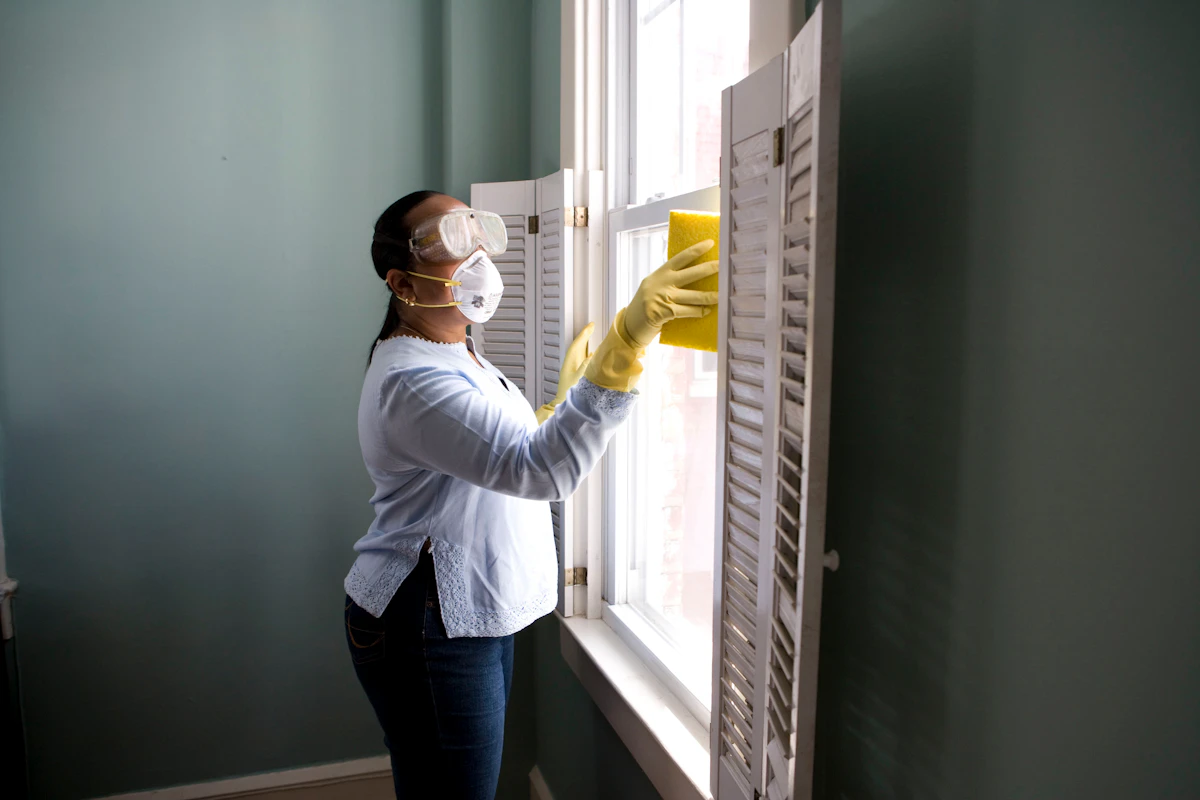
A homeowner usually spots it before anyone says a word, a pale haze on the trim, dust in a cabinet corner, a few scraps still hiding near a slider. The builder sees a completed project. The owner sees the part that still needs to be made livable.
<a id="the-job-is-a-handoff-not-a-touch-up"></a>
The job is a handoff, not a touch-up
Post construction cleaning is the final clean after a build, remodel, or addition. It removes construction residue, settled dust, and leftover debris so the space can pass a final look-over and feel ready for people to move through it. In Orlando, that matters because local permit volume keeps creating a steady stream of finished homes that need that last step before occupancy.
The City of Orlando reported 32,641 building-permit applications and 31,022 permits issued in its published utilization report, which helps explain why final-cleaning demand does not come from rare one-off jobs alone. A service like this is tied to the end of a project cycle, not to routine housekeeping.
<a id="what-belongs-in-scope"></a>
What belongs in scope
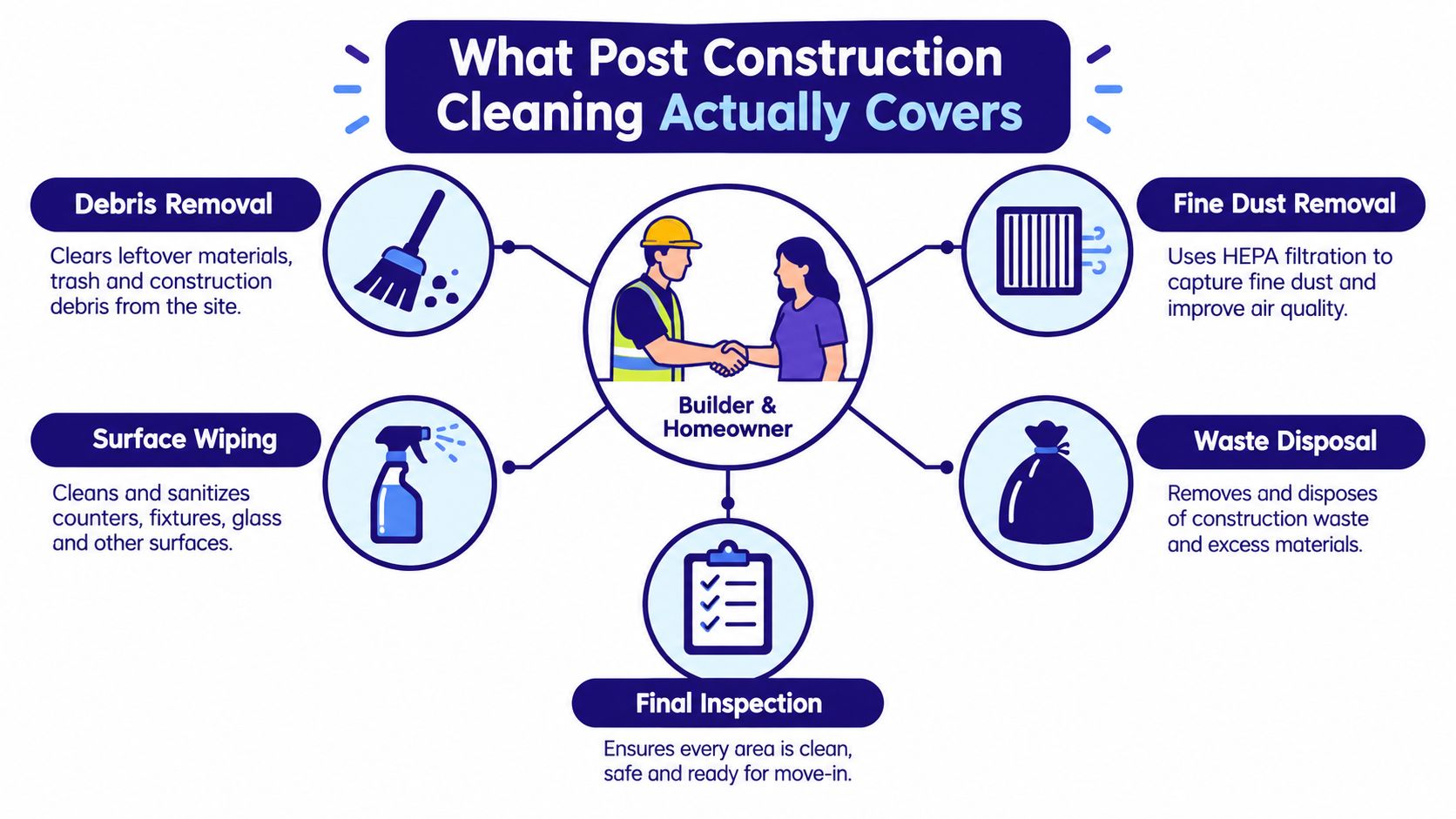
A proper final clean usually includes debris pickup, dust removal from ledges and trim, interior surface wipe-downs, and the detail work that catches drywall residue and fine construction film. Crews work room by room, starting high and finishing low so loose dust does not settle back onto already-cleaned surfaces. The standard is practical, not polished for show. Cabinets should open clean, counters should feel free of grit, floors should not track dust after a normal walkthrough.
That makes the quote answer two things clearly, what gets cleaned and what stays out of scope.
Practical rule: if a surface was touched by construction traffic, cutting, sanding, painting, or install work, it should be checked before anyone calls the place done.
That is also why a published starting rate helps as a price anchor. J&M Cleaning Team lists post-construction cleaning starting at $665, which gives homeowners and contractors a baseline for a specialized final-clean tier instead of a generic house-cleaning rate. A quote like that should reflect the actual residue, access, and finish level, not a casual mop-and-go visit.
<a id="why-renovation-dust-is-a-different-problem"></a>
Why Renovation Dust Is a Different Problem
Drywall dust and trade residue do not behave like ordinary household dirt. They drift into vents, settle on high ledges, and cling to finished surfaces where eye-level wiping misses them. The problem is not only what you can see. Fine dust can stay airborne or get stirred up again when people move through the space.
<a id="fine-particles-are-the-core-concern"></a>
Fine particles are the core concern
The EPA defines particulate matter as solid and liquid particles suspended in air, and it flags particles 10 micrometers or smaller as a particular concern because they can go deeper into the lungs than larger debris. Its guidance also notes that construction and remodeling are situations where work areas need to be separated from occupied spaces. A quick sweep is not enough after a renovation.
OSHA takes the filtration side seriously too. It defines a compliant HEPA filter as at least 99.97% efficient for 0.3-micrometer particles, and its silica construction standard restricts dry sweeping or dry brushing when those methods could increase respirable-silica exposure. That makes the cleaning method part of the safety plan, not just the finish result.
<a id="why-dry-sweeping-fails-in-real-homes"></a>
Why dry sweeping fails in real homes
Dry sweeping throws fine dust back into the air. In a finished Orlando home, that can mean it migrates into return air paths, lands on already-cleaned shelves, or gets stirred up again when a fan turns on. Controlled removal works better than a cloud-and-chase routine.
Key point: if the room looks clean but the air still carries fine dust, the job isn't done.
That is why post construction cleaning Orlando should be judged by containment, filtration, and the condition of hidden surfaces, not by a quick glance from the doorway. The tools matter because the particles do.
<a id="the-sequence-a-real-final-clean-follows"></a>
The Sequence a Real Final Clean Follows
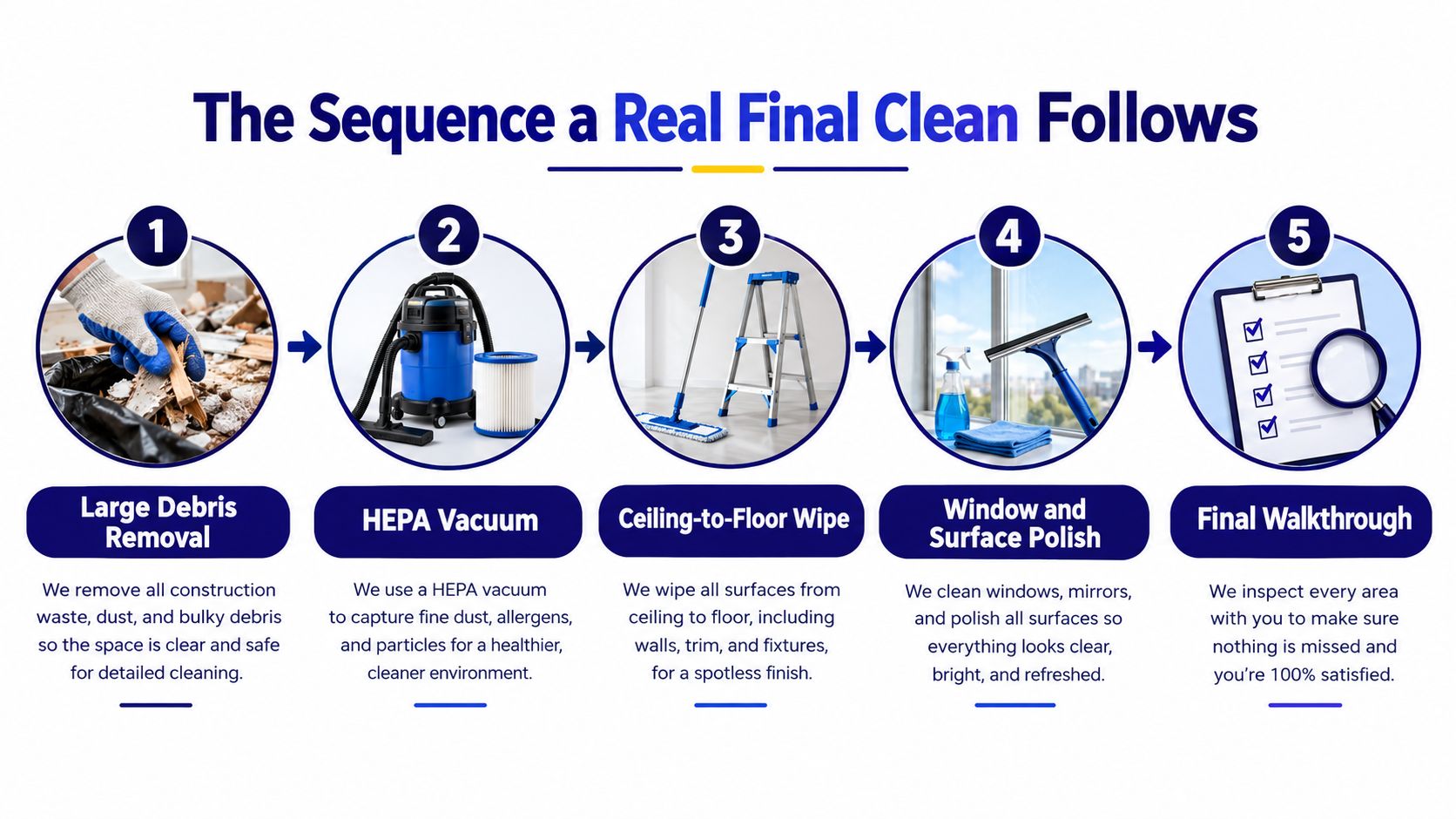
A credible crew doesn't start by polishing a counter and hope the dust goes away. The work starts with the messiest material first, then moves downward in a way that avoids recontamination. On a real job, that sequence is what separates a finished room from one that just looks tidy for ten minutes.
<a id="start-with-debris-then-capture-fine-dust"></a>
Start with debris, then capture fine dust
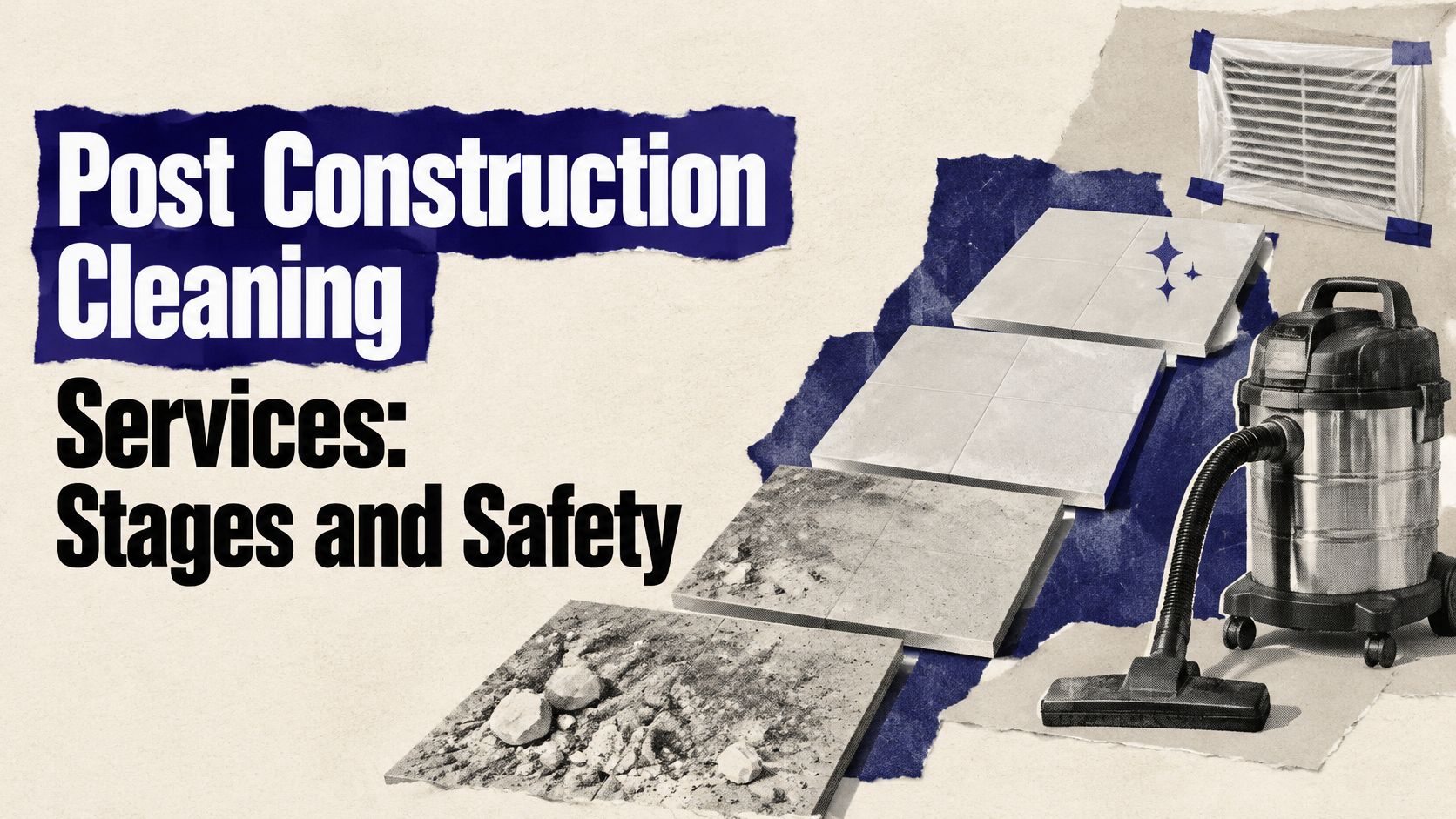
The first pass is physical removal of larger debris, scraps, wrappers, tape, and anything too big for the vacuum to handle cleanly. After that, the crew should HEPA-vacuum ceilings, walls, ledges, vents, cabinet interiors, and other horizontal surfaces before any damp wiping begins. That top-down order keeps settled material from dropping onto areas that have already been cleaned.
<a id="wet-cleaning-comes-after-the-vacuum-pass"></a>
Wet cleaning comes after the vacuum pass
Once loose residue is lifted, the next step is damp wiping and wet mopping. That matters because a feather duster or dry broom just redistributes the powder. In a home that's just been built or remodeled, the cleaning crew should be working from upper surfaces down to floors so trim, counters, and baseboards don't get re-coated.
<a id="watch-the-failure-points"></a>
Watch the failure points
Three things usually give the game away on a weak job, open windows that let dust ride through the air, ceiling fans spinning before the fine dust is controlled, and HVAC returns left uncovered while the work is underway. A good crew protects the space first, then cleans it. If you see a dry sweeper, a cloud of dust, or filter waste tossed loosely into a trash bag, the process isn't tight enough.
Here's the short version of what a proper sequence looks like on site:
- Debris removal first: bigger scraps come out before detail cleaning starts.
- HEPA vacuuming next: fine dust gets pulled from vents, ledges, shelves, and trim.
- Damp wiping and wet mopping: residue is lifted, not spread around.
- Final inspection last: high surfaces and HVAC-adjacent spots get checked again.
<iframe width="100%" style="aspect-ratio: 16 / 9;" src="https://www.youtube.com/embed/iwhJsjC4Npc" frameborder="0" allow="autoplay; encrypted-media" allowfullscreen></iframe>
That process is what gives a final clean a chance to hold up once the place is occupied.
<a id="why-orlando-keeps-final-cleaning-busy"></a>
Why Orlando Keeps Final Cleaning Busy
Orlando keeps producing finished projects that need one more pass. The HUD data shows a metro area with 2.87 million residents as of July 1, 2024, and average annual growth of 58,150 people, or 2.1%, since 2021. That kind of growth keeps builders, contractors, and property managers moving through a recurring completion cycle.
Housing production rose too. Builders permitted an average of 19,950 homes annually during 2021 and 2022, compared with 16,000 annually from 2015 through 2020, a rise of approximately 24.7%. Even when permitting moderated to 19,350 homes in the 12 months ending June 2024, the amount of new construction still left plenty of work that needed final dust and residue removal before move-in.
<a id="the-mix-changes-the-cleanup-need-doesnt-disappear"></a>
The mix changes, the cleanup need doesn't disappear
HUD also reported that condominium permitting fell 30%, from 4,425 units to 3,100 units, which shows activity shifts by property type rather than vanishing. Single-family, multifamily, and condominium jobs all feed the same final-clean pipeline. The operational reality is simple, crews need scheduling discipline, contractors need predictable turnaround, and homeowners don't want a finished project sitting in limbo.
That's why local service capacity matters. A finished property that misses its cleaning window can delay inspection, listing, or occupancy, even when the construction itself is complete. If you're comparing providers, J&M Cleaning Team's Orlando service page is a useful place to check the kind of residential scope that gets paired with local scheduling.
Orlando service coverage details
A good post-construction cleanup in this market has to fit into the rhythm of handoffs, not just into a one-off household chore.
<a id="what-stays-out-of-a-standard-final-clean"></a>
What Stays Out of a Standard Final Clean
A clean-looking room isn't automatically a safe room. That's the mistake people make when they assume every post-build mess belongs in the same bucket. Ordinary drywall dust is one thing, but some materials need assessment or abatement instead of cleaning.
<a id="know-the-line-between-cleaning-and-remediation"></a>
Know the line between cleaning and remediation
A standard final clean should handle construction residue, surface dust, and ordinary debris left by trades. It should not be treated as the fix for lead paint, asbestos, mold, chemical spills, or debris embedded inside HVAC ductwork. If those are suspected, the right move is qualified evaluation, not a bigger vacuum.
That distinction matters in a renovation-heavy market. Orlando's steady permit activity means crews are frequently handed spaces where several trades have already been through the house, and every trade leaves a different kind of residue. A good contractor or property manager should ask what type of material was present before deciding what “clean enough” means.
<a id="the-quote-should-answer-the-exclusion-questions"></a>
The quote should answer the exclusion questions
A solid estimate should spell out who supplies containment, who documents exclusions, and whether a re-clean is included after punch-list work. It should also say whether adjacent occupied areas are part of the scope. When those details are vague, the job can drift from a final clean into an argument about what the crew was supposed to touch.
If someone says “we'll clean everything,” ask what “everything” means before the crew ever arrives.
A visibly clean room can still have odor, irritation, or dust settling in vents and returns. If that happens after the clean, the space may need further evaluation rather than a quick cosmetic revisit. That's where a clear scope protects everybody, especially when you're trying to hand over a home without reopening the project.
For a standard residential example of what a scoped cleaning visit looks like, J&M Cleaning Team's standard service page gives a practical sense of how residential work is organized and separated from specialty remediation.
Standard cleaning scope reference
<a id="getting-a-quote-and-booking-the-job"></a>
Getting a Quote and Booking the Job
Most homeowners don't want a long sales call when the drywall is already down and the move-in date is close. They want to know what it costs, what gets covered, and whether a crew can show up on time. Flat-rate quoting is useful here because it reduces the guesswork that comes with hourly minimums and vague “starting at” language.
<a id="what-to-confirm-before-you-book"></a>
What to confirm before you book
A good booking conversation should lock down a few basics before anyone sets foot in the house:
- Paint and finish cure times: confirm that fresh coatings, adhesives, and flooring have had enough time to set.
- HVAC protection: make sure vents, returns, or air handlers won't pull cleaning dust back through the home.
- Access details: water, power, locks, codes, and any gate or entry instructions should be ready.
- Occupied-area isolation: if one side of the home is lived in, the crew should know what must stay separate.
That prep keeps the visit efficient and lowers the chance of a re-clean because something was rushed too early. It also helps the crew decide whether the work is a standard final clean or something more limited because another trade still has punch-list items open.
<a id="when-a-human-conversation-is-the-better-move"></a>
When a human conversation is the better move
An instant quote tool works well for straightforward homes, but a tight contractor deadline, a multi-unit punch list, or a weird scope is better handled by a person. J&M Cleaning Team lists phone support at (407) 668-0041, which is useful when the job needs a quick scope check rather than a back-and-forth form.
For pricing context and estimate behavior, this guide on cleaning-service estimates is a useful reference point.
Cleaning services estimate guidance
The operational protections matter too. Bonded and insured coverage, background-checked technicians, non-toxic supplies, and commercial-grade vacuums aren't nice extras on this kind of job, they're part of whether the crew can work cleanly around a finished home.
<a id="a-short-checklist-for-evaluating-any-orlando-quote"></a>
A Short Checklist for Evaluating Any Orlando Quote
A strong quote should tell you more than the price. It should tell you how the crew will control dust, what they're leaving out, and how they handle the final pass if punch-list work runs late. If the answers stay fuzzy, keep asking until they don't.
<a id="ask-for-proof-not-promises"></a>
Ask for proof, not promises
- HEPA equipment: ask what vacuum system they use and how filter waste is handled.
- Containment method: ask how they keep dust from traveling into finished rooms or HVAC returns.
- Scope exclusions: ask what happens if the crew finds mold, silica-heavy debris, or anything that needs specialist assessment.
- Re-clean policy: ask whether a follow-up is included if trades return after the main clean.
- Finish checklist: ask which surfaces get checked at the end, especially vents, ledges, and cabinet interiors.
A room can look clean and still fail the true test if dust settles out of sight. High ledges, return vents, and trim lines matter because that's where fine material collects after the visible mess is gone. The right provider should speak in those terms without making it sound complicated.
A straightforward way to judge post construction cleaning Orlando is simple, the quote should explain the process, the exclusions, and the handoff plan. If it doesn't, the price isn't the problem, the scope is.
---
J&M Cleaning Team handles post-construction cleaning for Orlando homes with flat-rate quoting, bonded and insured technicians, and a process built around final handoff readiness. If you need a crew that understands dust control, surface detail, and what should stay out of a standard clean, visit J&M Cleaning Team to get a quote and book the visit.